
朝5晚9US lifts TikTok federal-device ban, highlighting platform’s enduring US appeal: expert_我的网站
A | (ECNS) -- The first phase of the middle route of China's South-to-North Water Diversion Project had transferred more than 80 billion cubic meters of water to northern China as of Friday, directly benefiting nearly 118 million people, according to the Changjiang Water Resources Commission. The water comes mainly from Danjiangkou Reservoir, where managers balance reservoir inflows, local demand in the Hanjiang River basin, northbound supplies, and downstream ecological needs. This summer, after forecasts pointed to below-normal rainfall, authorities adjusted reservoir operations to retain about 1.5 billion cubic meters more water as a buffer against possible drought. Technology is playing a growing role in monitoring water quality. An AI-powered floating platform works alongside satellites, drones, and ground monitoring stations, feeding data into a digital twin of Danjiangkou Reservoir that tracks water quality, simulates flood scenarios, and supports emergency planning. At Danjiangkou Reservoir, the core water source for the middle route, an autonomous vessel collects samples from different depths to monitor algae. Using AI-powered microscopy, the floating station identifies microorganisms quickly and tracks algal activity, giving early warning of blooms. The vessel is part of an integrated satellite, aerial, surface, and structural monitoring network that combines remote sensing, drones, ground-based stations, and sensors embedded in the dam. By fusing multi-source data in real time, the system has shifted water monitoring "from isolated points to full-area coverage," said Cui Dongdong, deputy director of the technology development department at a company under the Yangtze River Water Resources Commission of the Ministry of Water Resources. With the digital platform, a regulation plan that once took days to produce can now be generated in seconds. The platform runs more than 15 professional models covering flood routing, pollutant dispersion, and dam structure simulation. The 1,432-kilometer middle route canal carries water across the Yangtze, Huai, Yellow, and Hai river basins before it reaches households in the north. Water quality has also improved, and the nationally protected "crystal jellyfish," known as the "giant panda of the water," is now sighted frequently in the reservoir, an indicator of excellent conditions. (By Helen Mo, intern Yang Hongran) 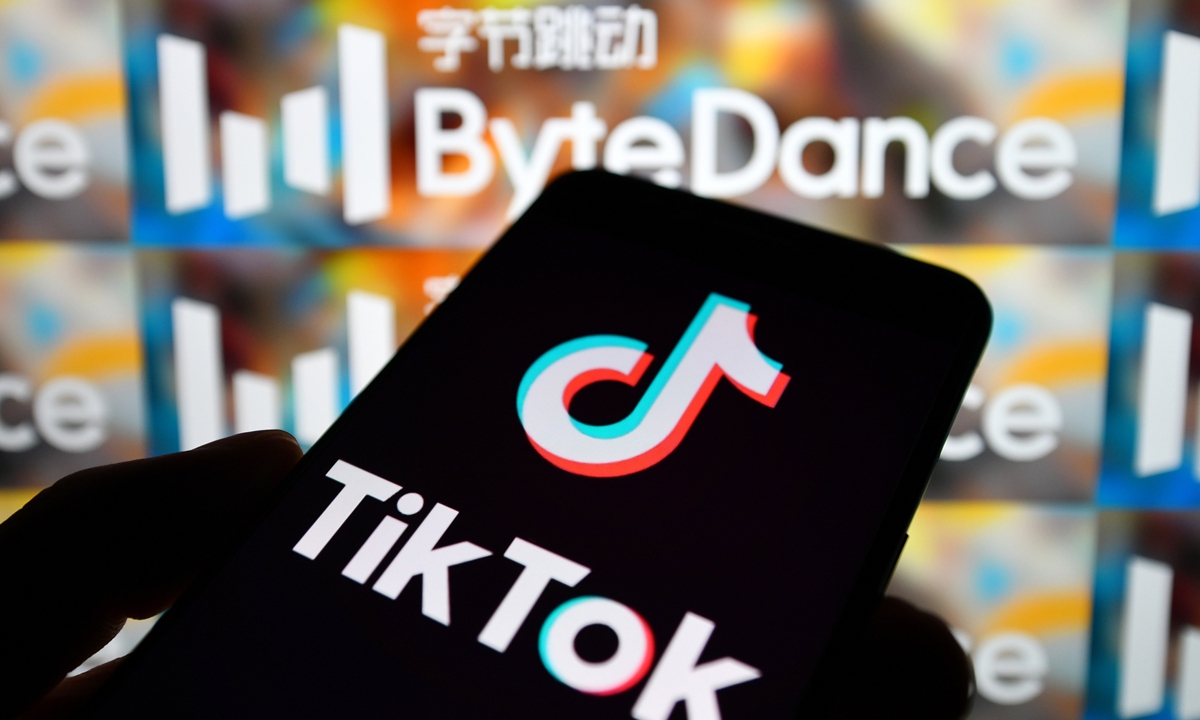 The Trump administration has formally lifted restrictions on the use of TikTok on US federal government devices following the restructuring of the platform's US operations, marking another step toward normalizing TikTok’s operations in the US. Analysts said TikTok's continued operation in the country after years of political and regulatory pressure reflects its deep reach among American users and businesses, as well as the competitiveness of Chinese-developed digital products. The White House Office of Management and Budget said in a memorandum dated Monday and released Tuesday that TikTok is no longer covered by a federal ban on its use on government devices, effectively lifting a restriction imposed over "national security" concerns tied to the platform's previous ownership by ByteDance. The decision was based on a legal opinion issued by the US Justice Department in July, which concluded that the version of TikTok now operated by the restructured US joint venture, or TikTok USDS Joint Venture, no longer falls under the 2022 federal government-device ban. The opinion also made clear that individual agencies still retain discretion over whether to allow employees to use the app on official devices. TikTok's ability to remain in the US market after years of political and regulatory pressure demonstrates its strong user appeal and commercial importance, Li Yong, an executive council member of the China Society for WTO Studies, told the Global Times on Wednesday. The platform has become deeply embedded in the US digital economy, with American creators and businesses relying on it to reach audiences, generate income and promote their products, he said. Its continued operation also reflects the broader global competitiveness of Chinese-developed digital products, Li noted. "Despite years of pressure, TikTok has preserved its core functions, business model and value as a global platform, showing that the appeal of a competitive product cannot simply be erased through political or regulatory restrictions," he said. Any politically driven move targeting companies of a particular country risks eroding foreign companies' confidence in the US market, and ultimately weakening the country's appeal as a stable and predictable destination for global business, the expert said. TikTok is used by about 170 million Americans, according to the White House, which noted that content creators rely on the platform for their livelihoods and businesses use it to advertise and connect with customers. Agencies including the Treasury, Transportation and Health and Human Services departments launched TikTok accounts following the Justice Department's July opinion, while the White House had already created an account last year, according to Politico. In 2022, the US Congress passed the No TikTok on Government Devices Act, barring TikTok from federal government devices, with several states later following suit. The pressure escalated in 2024, when Congress required ByteDance to divest control of the platform or face a US ban. TikTok briefly went dark in January 2025 before President Donald Trump delayed enforcement while a divestiture deal was negotiated. The restructuring was completed in January 2026 with the establishment of TikTok USDS Joint Venture. According to the company's official announcement, ByteDance retains a 19.9-percent stake, while the rest is held by investors including Oracle, Silver Lake and MGX. Under the new structure, the joint venture oversees US user data, algorithm security, content moderation and software assurance. Meanwhile, TikTok has retained global product interoperability, with TikTok global's US entities continuing to manage certain commercial activities, including e-commerce, advertising and marketing, according to the company. During the China-US economic and trade talks in Madrid, Spain in September 2025, the two sides reached a basic framework consensus on properly resolving the TikTok issue through cooperation, reducing investment barriers and promoting relevant economic and trade cooperation, according to China's Ministry of Commerce (MOFCOM). A MOFCOM statement said that the Chinese government fully respects companies' wishes and supports them in conducting equal-footed commercial negotiations based on market principles. China will also review matters involving TikTok's technology exports and intellectual property licensing in accordance with the law. China urged the US to provide a fair, open, transparent, and non-discriminatory business environment for the continuous and stable operation of Chinese enterprises in the US, so as to promote the stable, healthy, and sustainable development of China-US economic and trade relations, a MOFCOM spokesperson said in December, commenting on the reported agreements to establish TikTok's US joint venture. 。 Current article:http://7hmlyh.shengyaodanrongchui.buzz/rmllu/20260826/4301.html Published on:06:11:18 |


 。
。